
When it comes to planning an office space that’s right for your business, it’s essential to consider the office fitout.
Office fitout and design is the process of adjusting the lease space to suit the needs of the office occupants.
The end result can include everything from installing workspaces or breakouts to designer office fitouts with creative additions and productivity-enhancing touches. Creating a great office space often includes important functional and performance considerations such as energy efficiency, sustainability, ergonomics and technology. These physical and aesthetic improvements can improve employee satisfaction, wellbeing and productivity. So it’s crucial to get the right advice from the beginning.
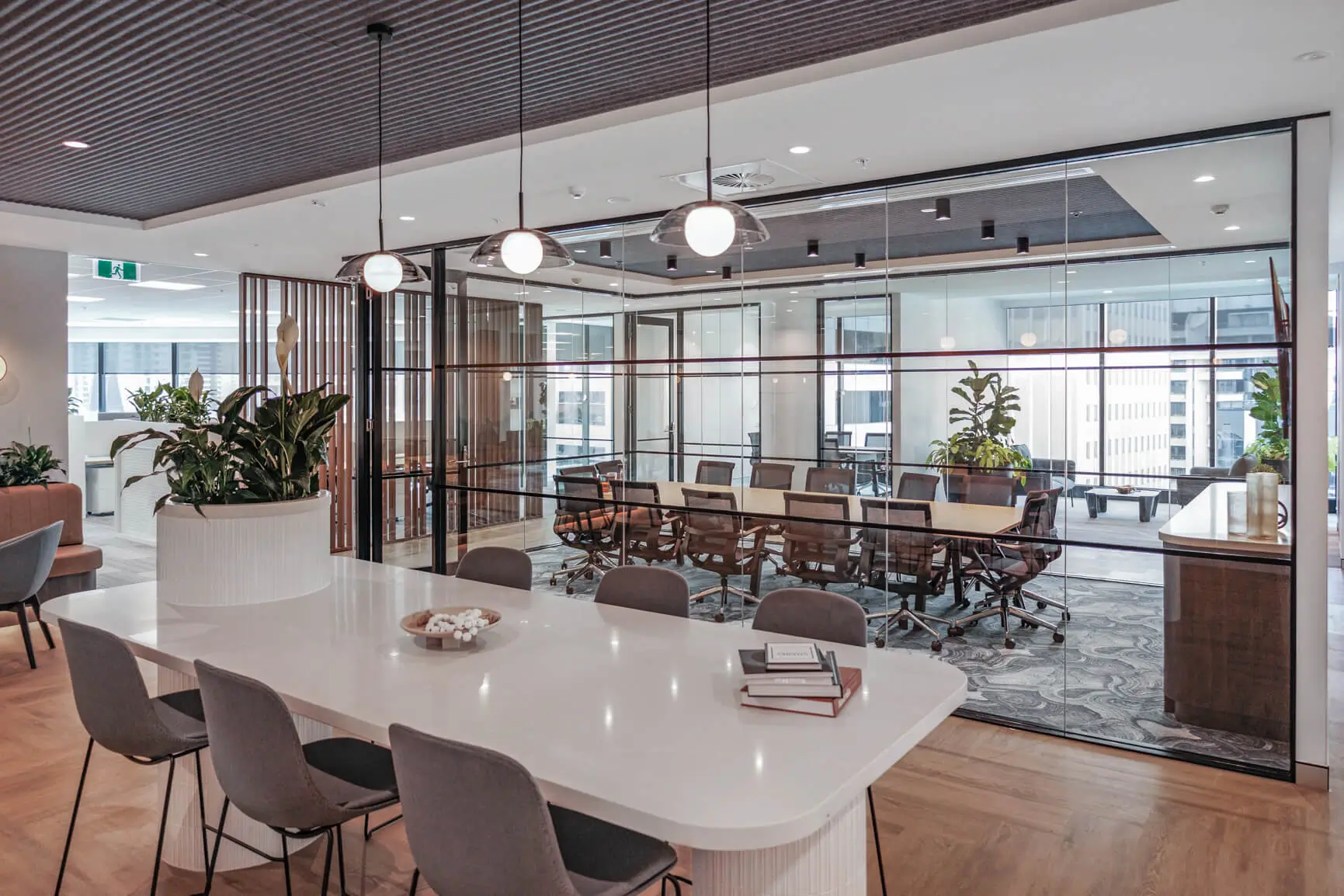
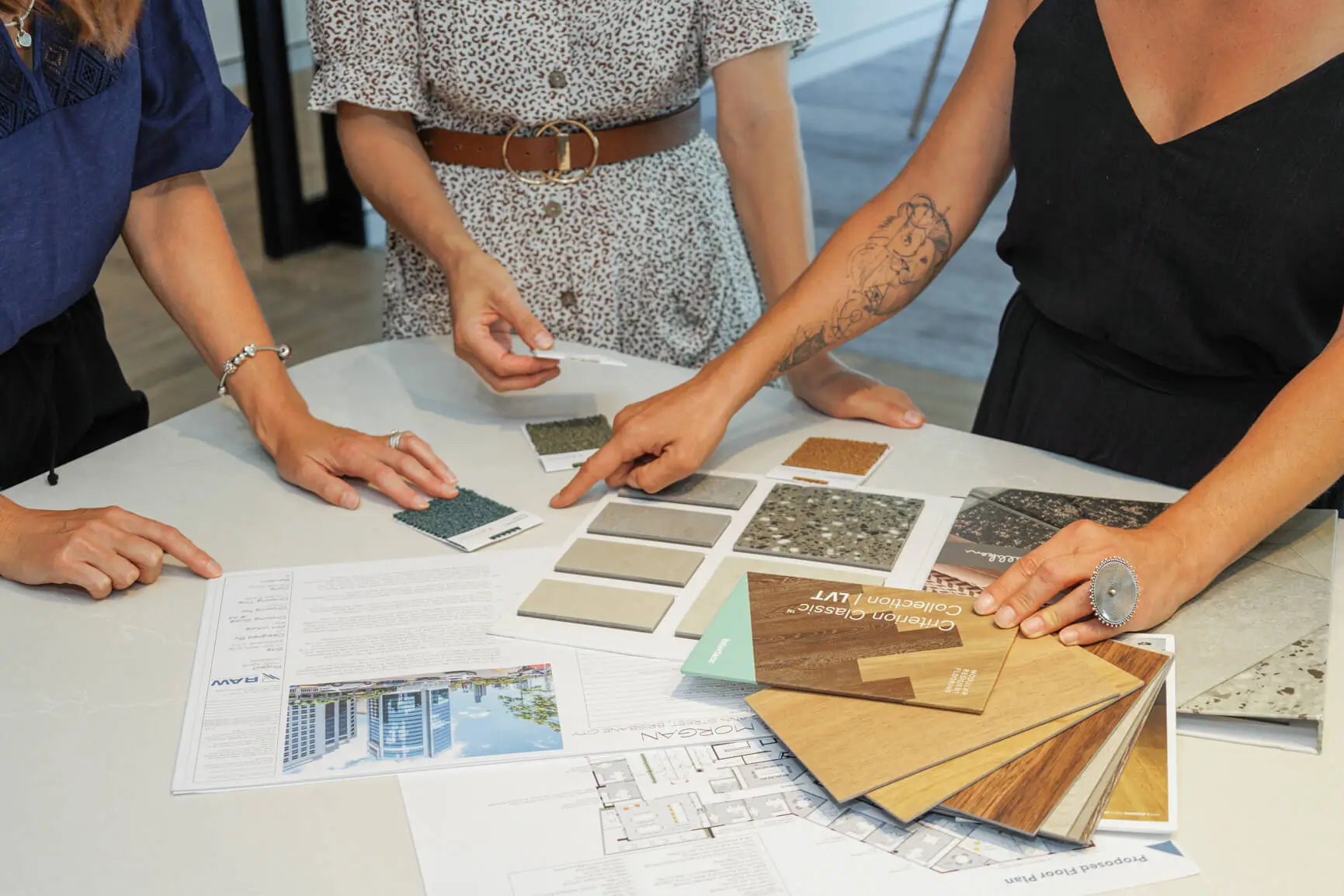
There are many different elements that you can and should consider when designing your office fitout.
So, what is the design process? The first step is taking into account the available space.
If your business has leased space with existing infrastructure, then more time and resources can be spent on the commercial office fitout and design. However, if the premises is an empty shell, considerable time and effort will first be required to install basics such as lighting, air-conditioning, plumbing and electrical fittings.
Our design and fitout expert can then move on to planning your new office space. There are several elements that our interior designer will review to commence your office design, including:
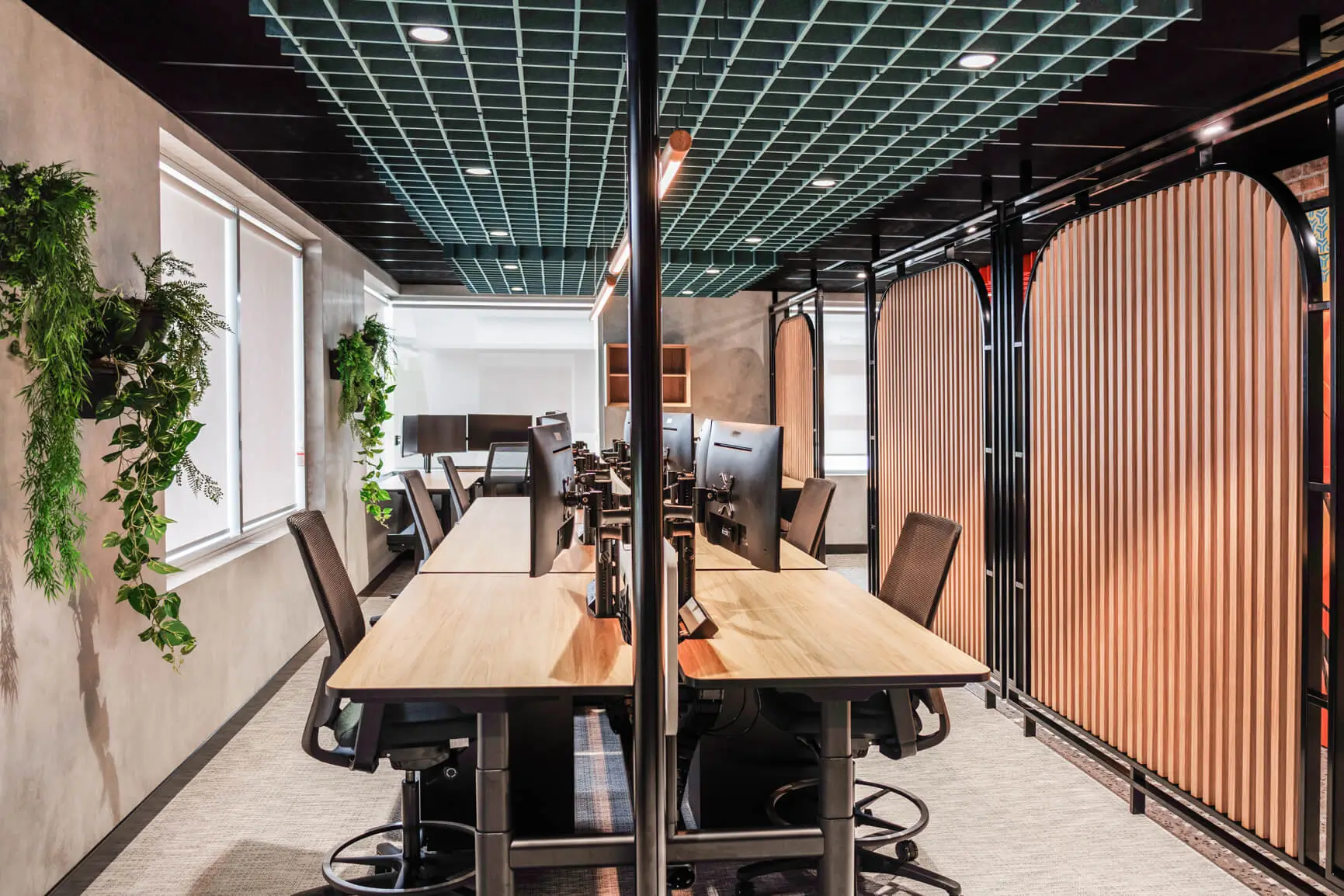
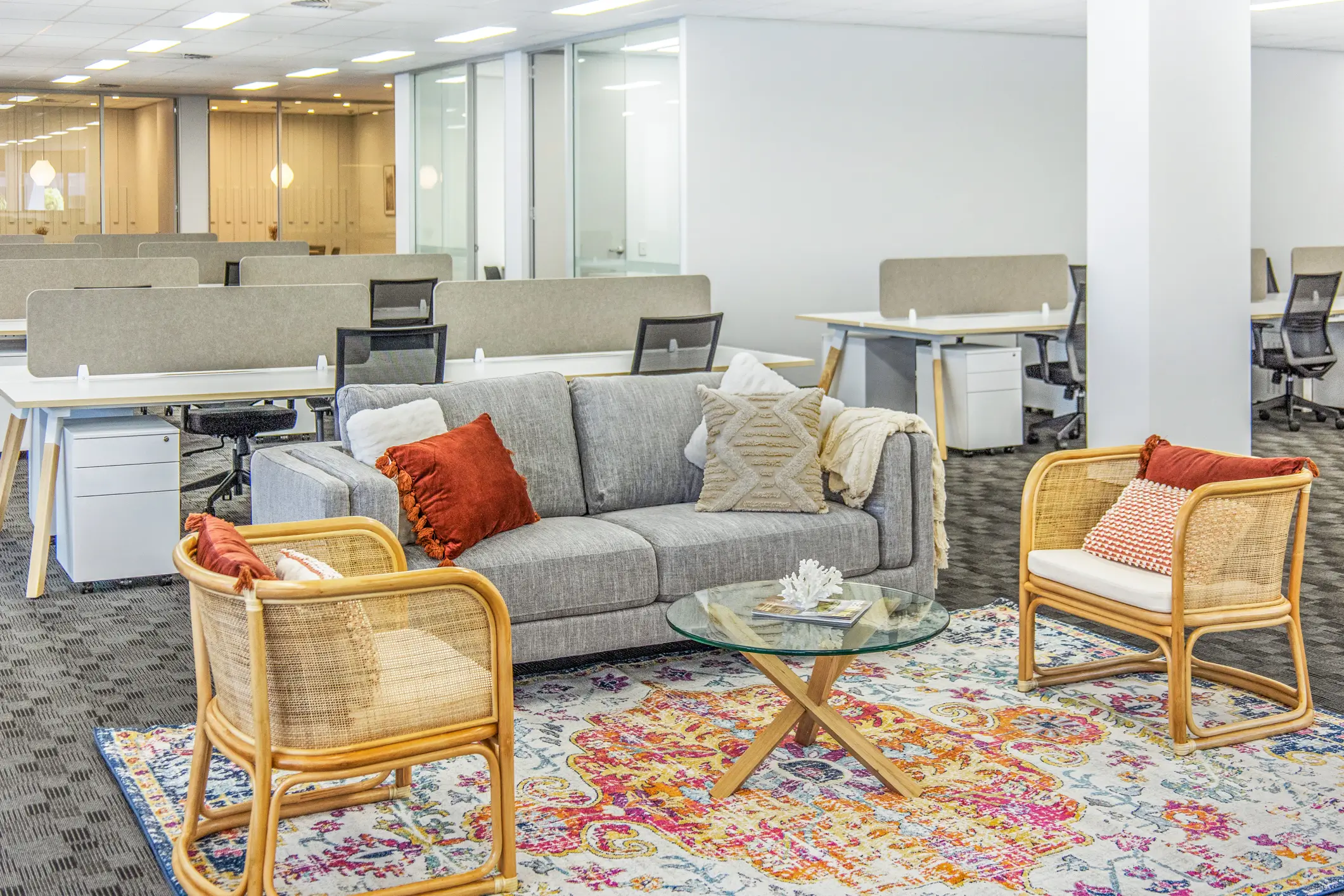
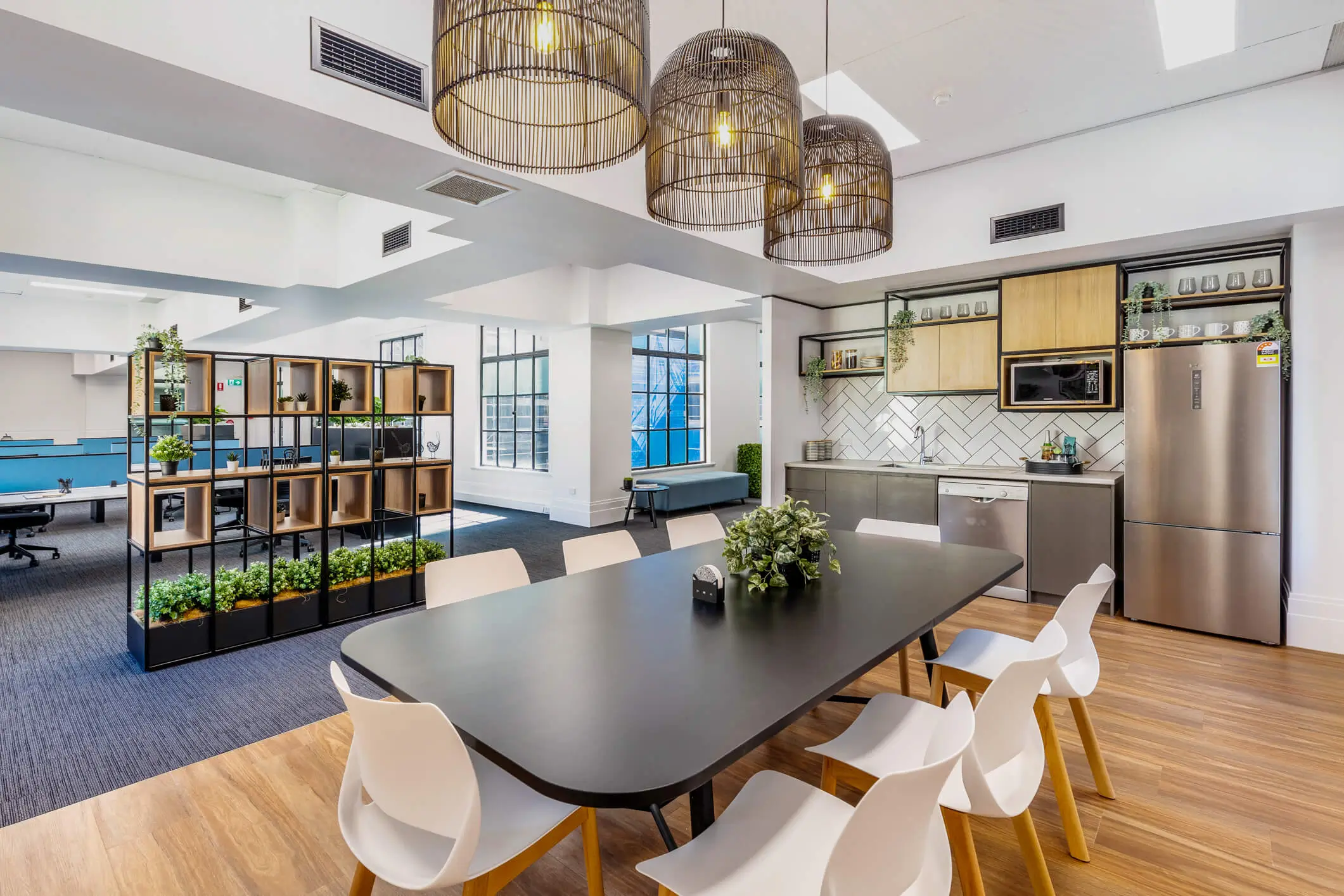
Interior design for commercial office fitouts goes beyond deciding where to put the desks and chairs.
Human-centric design is important to meet the needs of staff and visitors, boosting wellbeing and productivity.
That’s why it is vital to align the business’s ethos with the office’s fitout.
Once our interior designer considers and understands your project brief, they will develop an original concept plan and perhaps a mood board to provide indicative imagery.
When the concept plan is approved, a project budget can be supplied along with an initial fitout program. This can help to negotiate leases with secure finance or development approvals.
The main design phase can then begin. The schematic design finalised in the previous stage is further developed before selecting a colour palette, materials, finishes and furniture. The final design is then presented to the client, usually as a 3D image. This helps to inform a final scope of works and a fixed price proposal.
Once the project is confirmed and all approvals are granted, the construction can commence. To understand more about how the design process works in practice, read about how accounting and business consulting firm Elements Advisory Group worked with RAW Commercial Projects to create a stunning office space fitout for their team and clients.
The best office interior design considers your business’s unique needs and creates an environment that nurtures high performance.
An investment in the best corporate office interior design will ensure you have a space for your business, staff and clients that reflects your company’s values.
This is particularly important if your business is customer-facing as it can communicate your brand aesthetic and values, not to mention impact your reputation with customers.
From creative small office interiors to retrofitting a heritage space, the best office designs are those that are fit-for-purpose and offer value to clients.
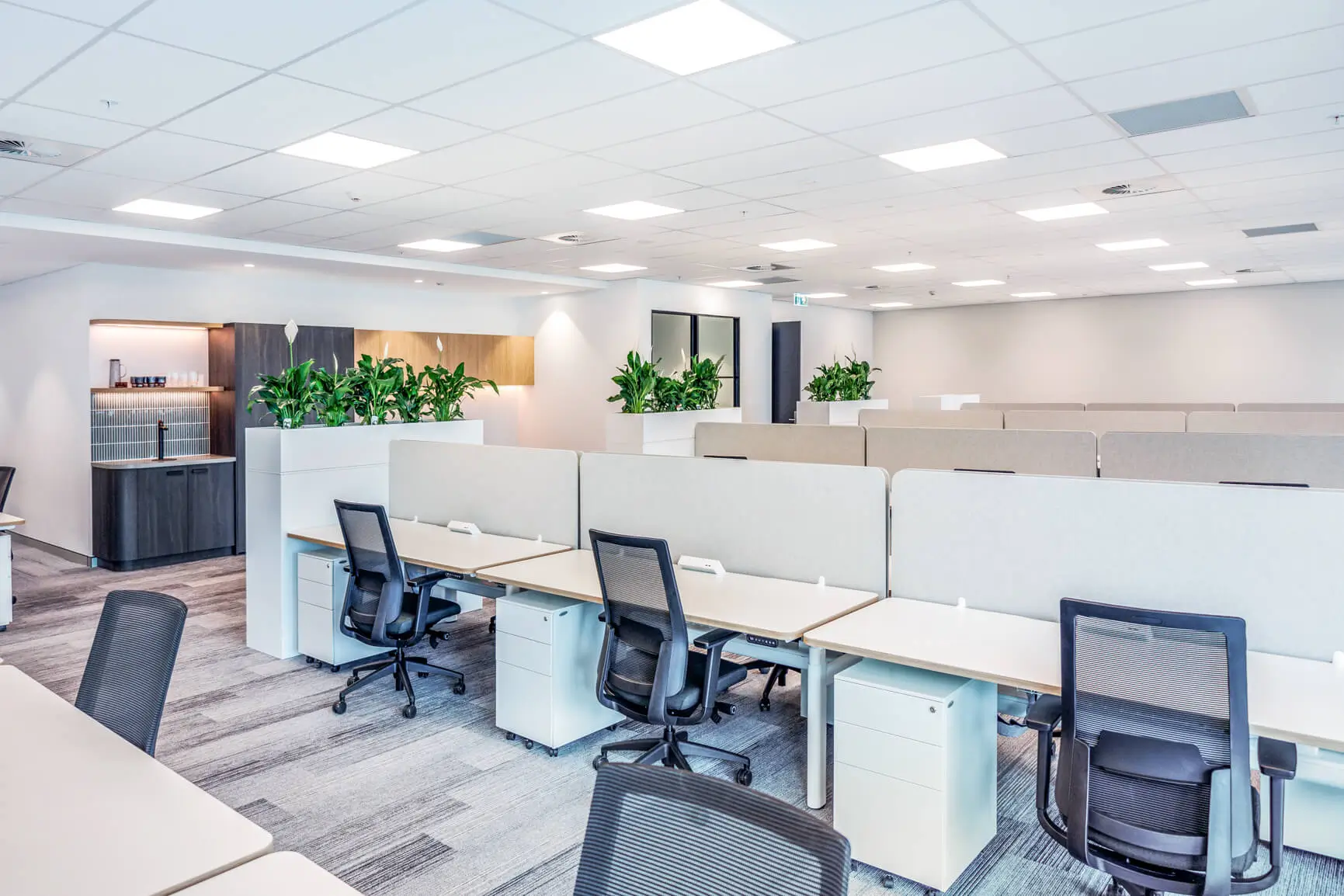
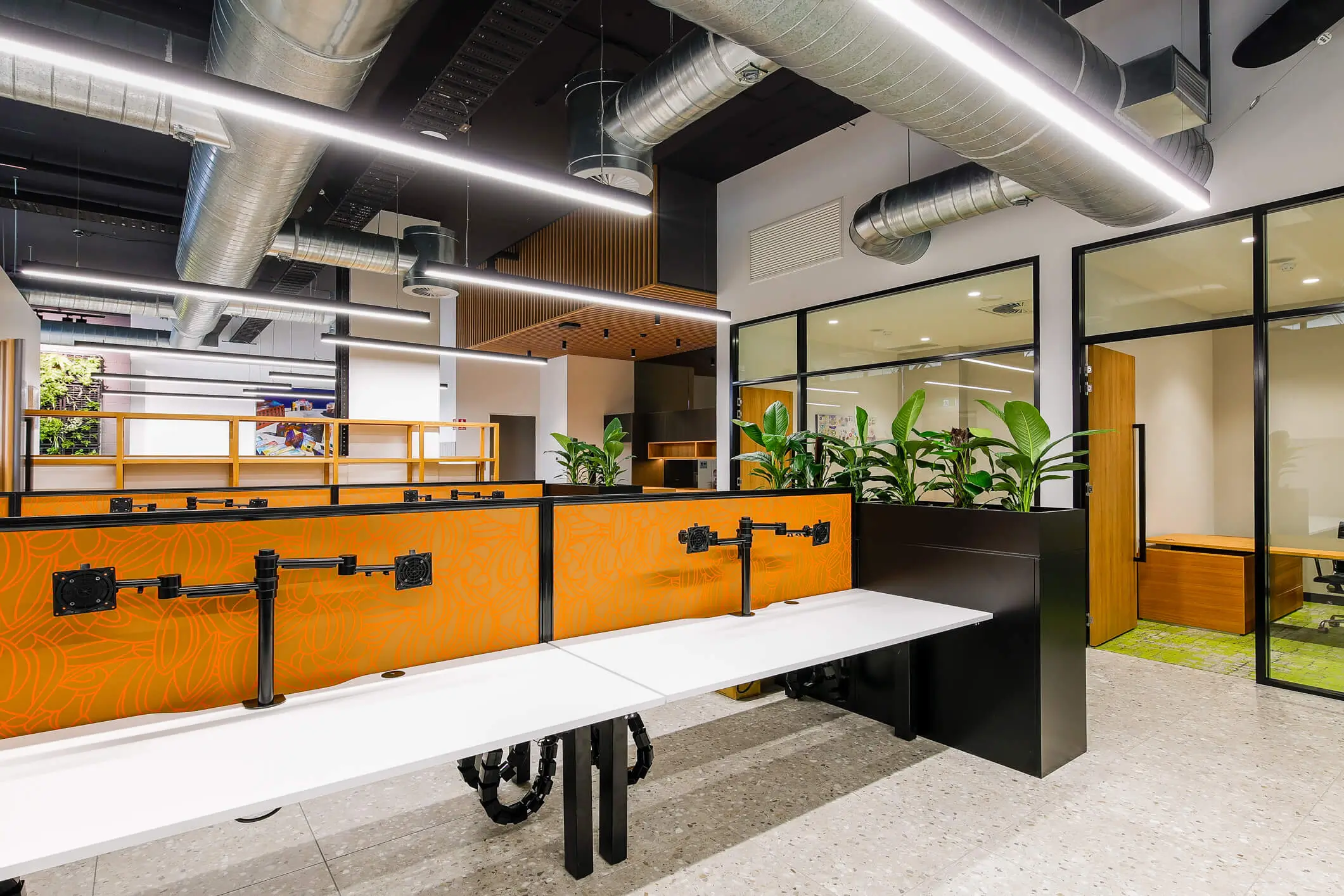
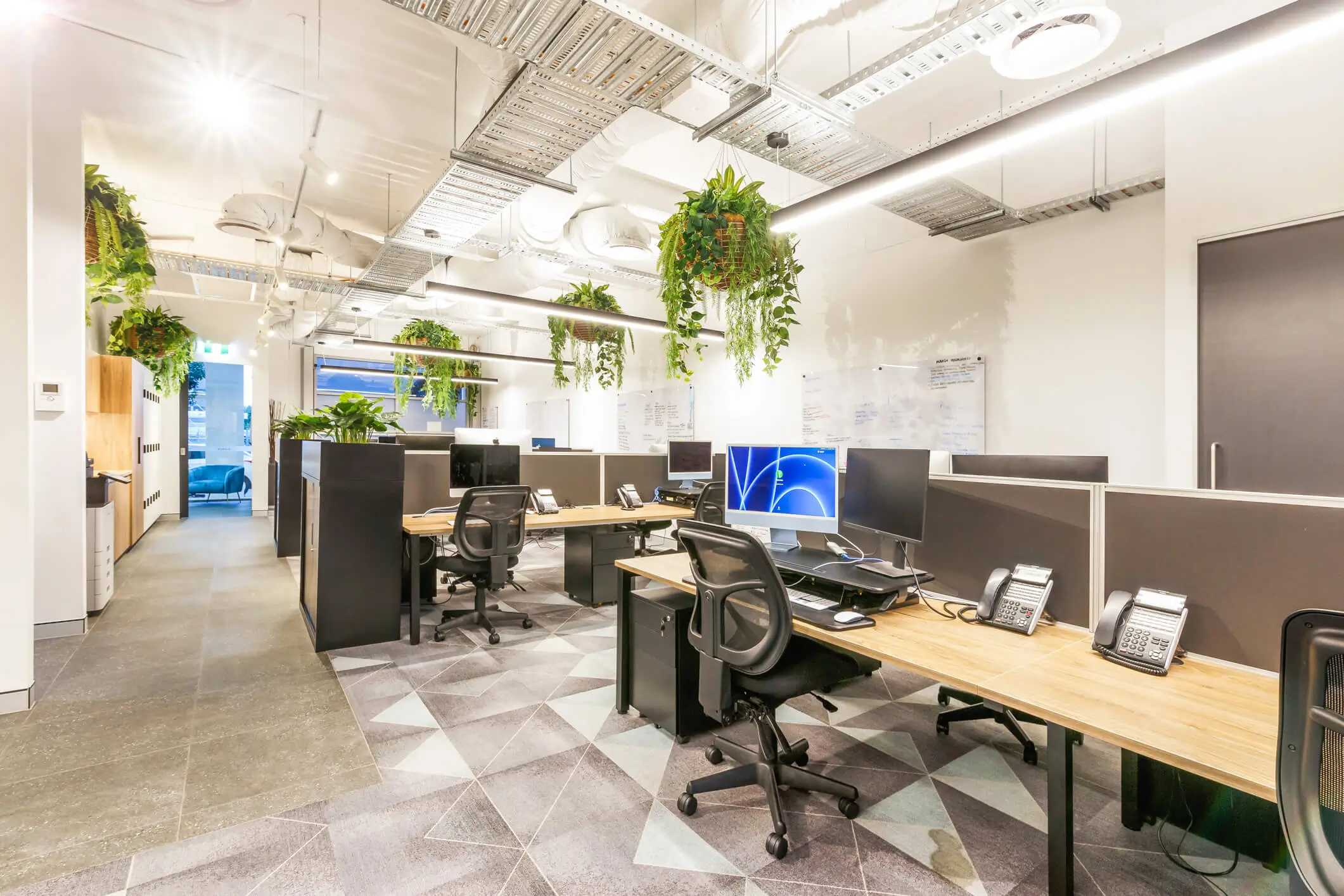
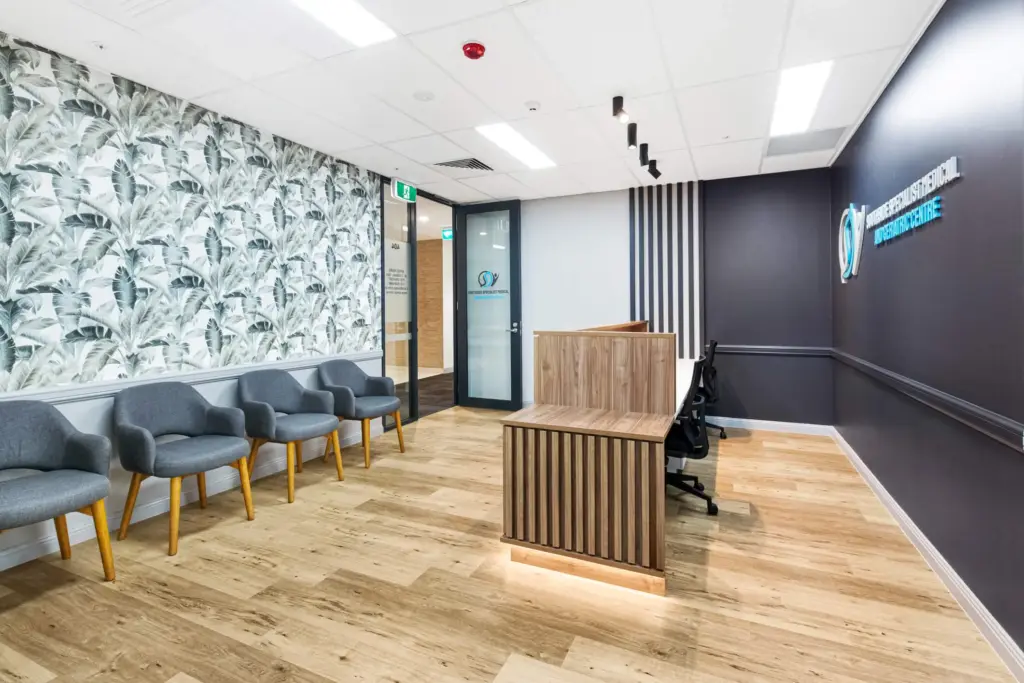
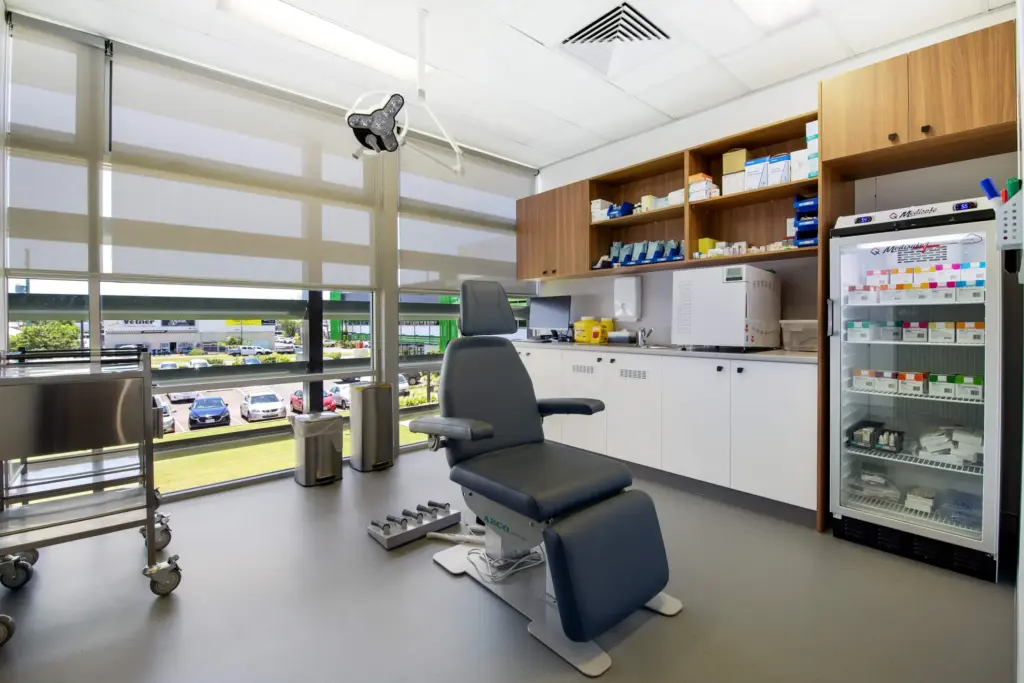
When it comes to interior design for medical offices, there are a few elements that are important to ensure comfort and safety for both healthcare professionals and patients.
Privacy, hygiene, lighting and acoustic control are critical in the medical suites, while consumer accessibility and comfort should be top of mind for any waiting areas.
The overall design of the suites should evoke calmness and quiet. This flows onto the seating arrangements, as well as the lighting.
Specialist medical fitouts deliver high-quality design and construction that meet the compliance regulations for the healthcare industry.
Office fitout design is increasingly incorporating sustainability and wellbeing initiatives. The Green Building Council of Australia urges project teams to consider sustainability best practices across several categories and considerations.
These include measures to enhance the indoor environment, like air quality, thermal and acoustic comfort, and initiatives to reduce energy consumption and boost energy efficiency.
Other considerations include reducing water use, using innovation to improve sustainability and initiatives to reduce the dependence on private car transport.
The National Australian Built Environment Rating System (NABERS) says the energy used by office tenancies can equal half of a building’s total energy use and offers ratings for office tenancies on energy and indoor environment. It looks at air quality tests, lighting and internal noise as well as energy use and efficiency.
Complimentary Building and Design
Assessment
Book your complimentary assessment to have your premises reviewed with our Managing Director, Richard Wiseman.